From rainfall to collection
The process begins where rainwater reaches the built environment.
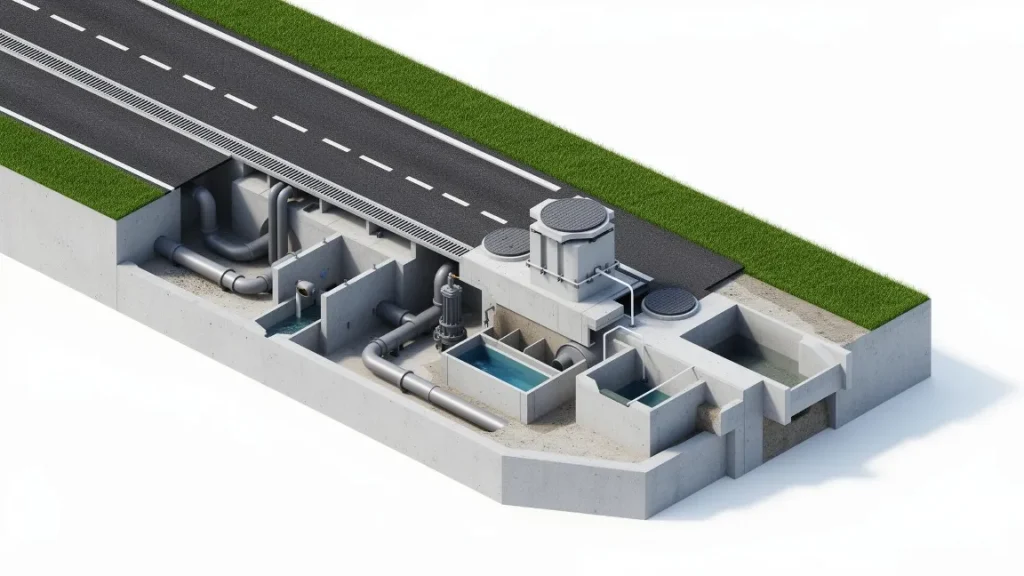
Depending on the application, water may be collected through roof drainage systems, surface drainage, channels, gullies or other collection points. The right approach depends on the type of infrastructure, the surrounding environment and the volume and characteristics of the water being managed.
Moving water through the system
Once collected, water needs to move through the drainage network.
This can involve channels, pipes, connectors, access systems and other components designed to support the movement and maintenance of the system.
At this stage, the objective isn’t simply to move water quickly. The drainage system needs to work as part of the wider infrastructure.
Separation and treatment
Not all collected water is the same.
Depending on where the water originates, it may contain sediments, oils or other pollutants that need to be managed before discharge.
Specialist systems such as oil-water separators and other treatment solutions can form part of the overall drainage strategy where appropriate.
Flow control and discharge
Before water reaches its final discharge point, flow may need to be controlled or managed.
The final stage could involve discharge to an appropriate receiving environment, subject to the project’s design requirements and applicable standards.
One system, not individual products
A Rain-to-Drain approach looks at the complete journey rather than treating each component as an isolated product.
For DND, this means working with specialist manufacturers and project stakeholders to connect the right technical solutions with the requirements of the project — from early design discussions through to supply and delivery.
The goal is simple: understand the water journey and build the right solution around it.